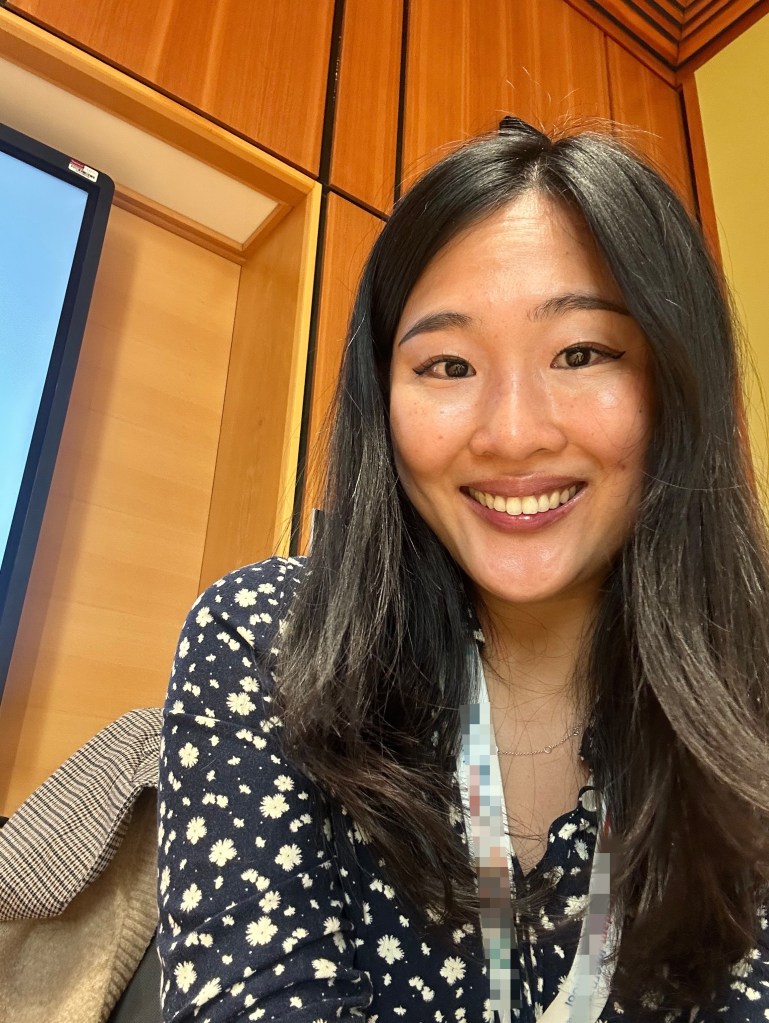
Before you come for me — yes, I know. “Europe is so broad. Just specify your country.”
I hear you. But I had to catch your attention somehow. 😉
***
“No, where are you really from?”
I work in an international school in the Netherlands where everyone is from somewhere. On the surface, it looks like the ultimate multicultural dream, diversity done right.
If you look at the students, nationality-wise? Absolute buffet. American, Dutch, Australian, Italian, Spanish, Indian, French… etc. You name it.
But when you look a little closer, something else comes into focus.
Out of 100+ staff members — not one face that looks like mine. Not sometimes. Not occasionally. Consistently.
So what does that actually feel like?
It depends on the person standing in front of me.
Most colleagues register it and move on. Some, well-meaning and curious, open with the classics:
“Where are you from?”
“No, where are you really from?”
“Are you Chinese?”
Like, they know I’m Australian, but this Asian face of mine still seems to evoke curiosity.
***
I didn’t want to feel this way
I’ve worked in predominantly white environments for over ten years previously in Australia and now in the Netherlands.
I’m used to standing out. I know what it feels like to be the one face in the room that doesn’t quite match the rest.
And I know how to carry that.
But sometimes — and I think it’s important to be honest here — I’m not.
I’d watch Dutch colleagues gravitate toward each other. Spanish colleagues find their easy rhythm together. There’s this unspoken alliance that forms when you share a background, a language, a reference point. No effort required. It was just… given to them.
And I’d wonder: What would it feel like to have that?
Here’s the thing — this wasn’t my first rodeo. I’ve navigated being the only Asian in the room more times than I can count. I know the feeling well enough by now to know how to move through it, how to let it settle, how to not let it swallow me whole.
But a new country adds a different weight to it.
I wasn’t just new to the school. I was new to the ground beneath my feet — and I was navigating all of it without a natural anchor point.
There are a handful of Australians at my school, which helps in its own way. But even within that small familiar pocket, I still stand out. Being from the same country doesn’t erase the fact that I’m still the only Asian face in that particular circle.
So the ache in those first six months wasn’t really about not knowing how to belong. I’ve learned that. It was about having to start the work all over again — in a new place, with new people, from scratch.
I guess I simply didn’t want to feel othered. I didn’t want to be the one, yet again, doing the extra work of explaining myself.
So I wished, more than once, that things were different.
***
Here’s where it gets interesting
Not having many opportunities for automatic alliance has pushed me to look at connection differently over and over again.
Over the last decade, I’ve slowly trained myself to ask “Are you like me?” less, and “Do we actually connect?” more.
And in this new environment, I’ve had to lean on that lesson harder than ever.
Because some of the colleagues I feel closest to now — on paper, we make no sense.
Different continents. Different life paths. Different ethnicities. Different genders.
And yet, we sit in the staffroom having conversations that go somewhere. Conversations that feel honest, energising, and real.
I stopped waiting to find “my people” in the obvious way.
And there’s a particular kind of magic in finding someone you have no reason to click with — and then you do.
No shared passport, no cultural shorthand. Just two people meeting without assumptions and deciding, yes, this works.
When belonging is handed to you, it’s easy to confuse familiarity with depth.
When you don’t have that shortcut, you learn to look harder. Stay curious longer. Ask better questions.
Not just “Where are you from?”
But “What shaped you?”
And somewhere in that extra effort, something shifts.
You stop sorting people into columns of relatable and not-relatable. You start noticing that the colleague who grew up nothing like you laughs at the same absurdities. That connection doesn’t actually need a common origin story — it just needs two people willing to show up honestly.
I won’t pretend the ache disappears entirely.
There are still days I walk into a room and feel the quiet weight of being the only one. Still moments I wish I could share a look with someone who just knows — without me having to explain the context, the history, the particular nuance of being Asian in a space that wasn’t quite built with me in mind.
But I’ve stopped waiting for that person to appear before I let myself belong.
Because belonging, I’ve learned, isn’t something that gets handed to you based on who you look like. It’s something you build — conversation by conversation, one unexpected connection at a time. chance to discover what you have in common, no matter how small. You just need to learn to make small talk meaningful.
***
So, what is it really like being Asian in Europe — at work? 𝐭𝐨 𝐌𝐚𝐤𝐞
It’s being noticed before you’ve had the chance to introduce yourself.
It’s answering the same questions on repeat and deciding, each time, how much of yourself you want to offer.
It’s the quiet awareness that, sometimes, you’re not just a colleague. You’re the Asian colleague.
The reference point. The exception. The unspoken checkbox.
It’s being asked questions that sound harmless on the surface — but carry the weight of assumption.
“Where are you from?”
“Are you Chinese?”
“You must speak…”
And having to decide, in real time, whether you correct, explain, deflect — or just let it pass because you’re tired.
It’s knowing people are curious about you — and not always wanting to be the subject of that curiosity.
Not wanting to stand out that day.
Not wanting to represent anything.
Just wanting to be… ordinary.
And sometimes, it’s being misunderstood in ways that are hard to name.
Mistaken for quiet when you’re observing.
For agreeable when you’re choosing your moment.
Not out of malice. But out of unfamiliarity.
But it’s also this:
Over time, you stop shrinking to make things comfortable.
You start noticing the moments where silence costs more than speaking.
So you speak.
You correct gently, when it matters.
You challenge, when it’s needed.
You explain — not because it’s your job, but because you’ve decided it’s worth it.
And slowly, those moments you once dreaded become something else.
Openings.
You start using them — the questions, the assumptions, the awkward pauses — as small points of education. Not lectures. Just… nudges. Clarifications. Perspective.
You realise you’re not just being seen — you’re shaping what people see.
Europe didn’t make me less Asian.
If anything, it has made that part of me more visible — and, eventually, more intentional.
And maybe that’s the part no one tells you.
That being the only one in the room can feel like being put on display at first. Like you’ve been handed a role you didn’t audition for.
But if you stay with it, you learn how to rewrite it.
You learn when to step forward — and when to step back.
When to educate — and when to protect your own energy.
When to represent — and when to just be a person having a normal Tuesday.
My experience is just one version of many.
But if you’ve ever felt like you were carrying more than just yourself into a room —
then you already understand.
Anita x
***
P.S. If this resonated and you’re navigating Western workplaces as a non-native speaker — I made something for that: Confident Connector Kit. Meetings, workplace social situations, and more. Thriving confidently, exactly as you are. No perfect English required. Because you deserve more than just getting by. 👑✨


Leave a comment